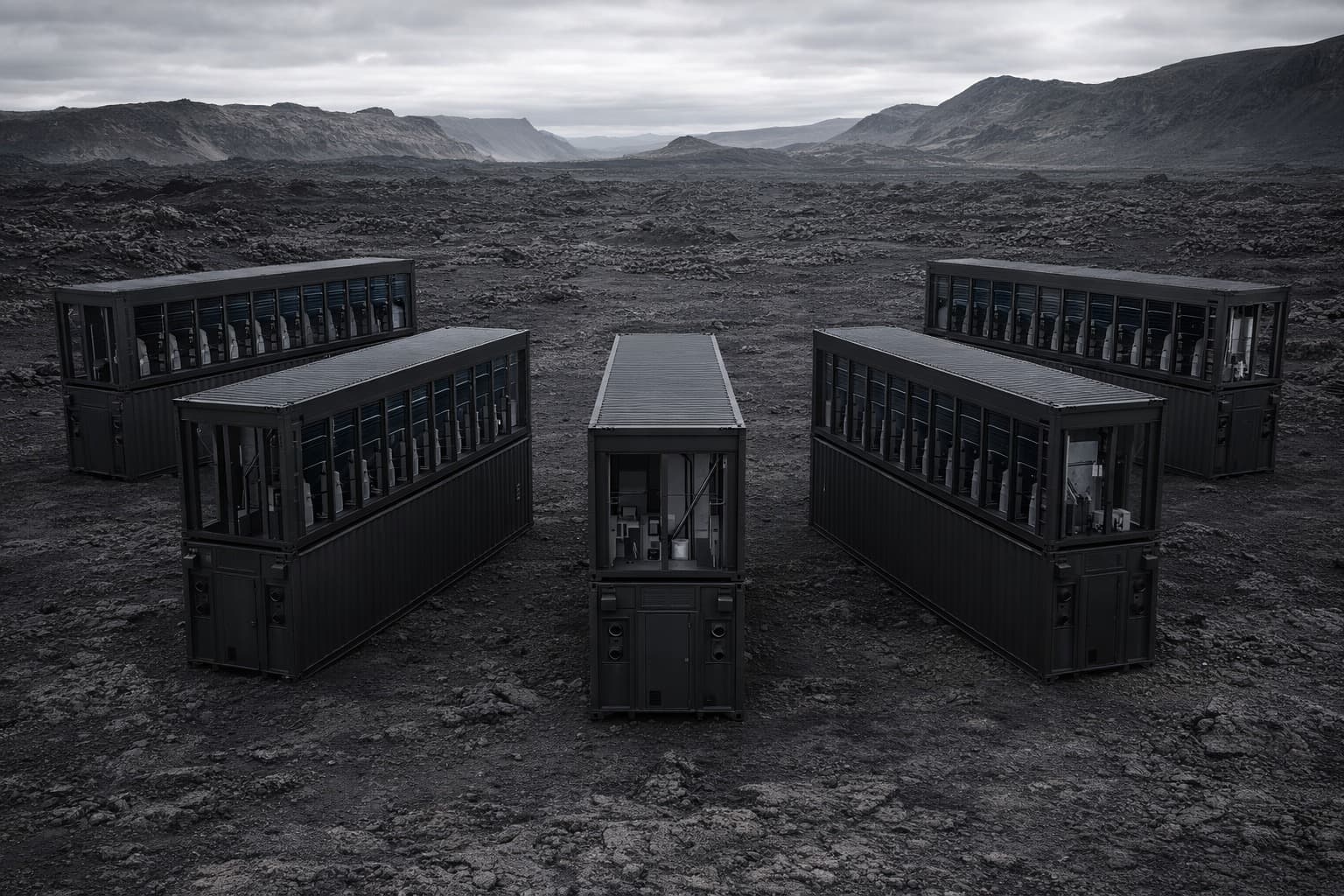
Own the infrastructure behind the Hardest Asset ever created
We source and build bespoke Bitcoin mining operations tailored to your investment goals. From site selection to ongoing optimization, every solution is custom-built for you.
You own the hardware. You earn BTC, deposited directly to your wallet, daily.
Bitcoin mining is
infrastructure investing
Think of it like real estate development. You own the physical asset. We build the site, source the energy, maintain the hardware, and optimize performance.
We don't control the market any more than a developer controls property prices. What we do control: location, energy, uptime, and operational efficiency.
You own
The mining hardware, outright. Not a share, not a token. The physical ASIC machines.
We manage
Hosting, energy contracts, maintenance, cleaning, insurance, and 24/7 monitoring.
You earn
Freshly mined Bitcoin deposited directly to your wallet. Daily. Zero transaction history, zero intermediaries.
Global infrastructure, local execution
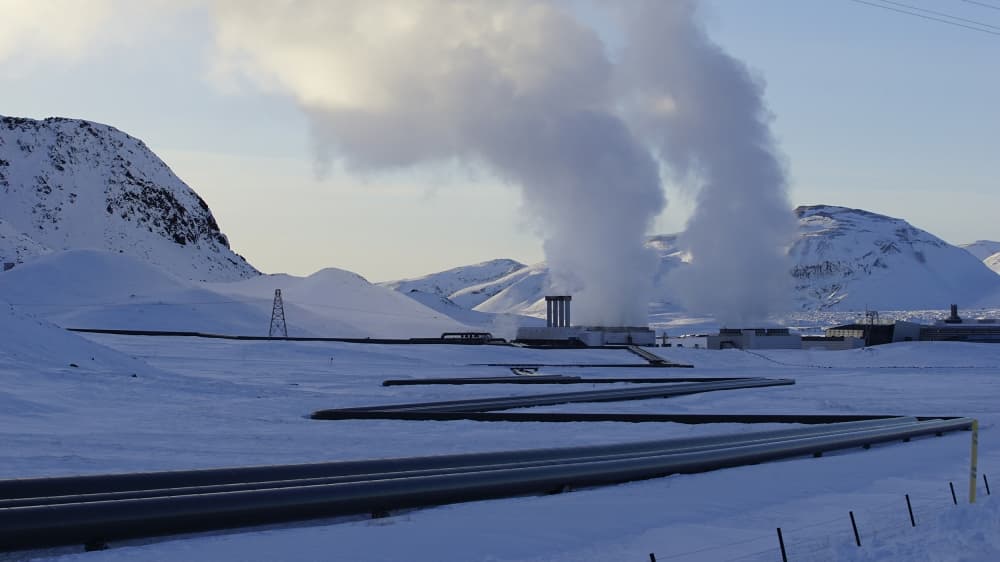
From the fjords of Norway to the deserts of the UAE, our facilities are strategically located for political stability, renewable energy, and optimal performance.
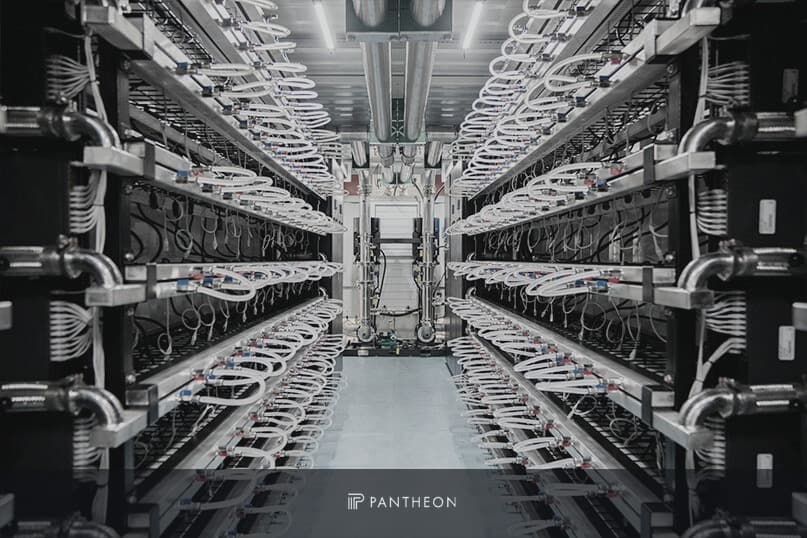
Integrated All-in-One Container
Racks, CDUs, power cabinets, and control systems consolidated into a single containerized unit. Fully operational from day one, deployable anywhere within weeks.
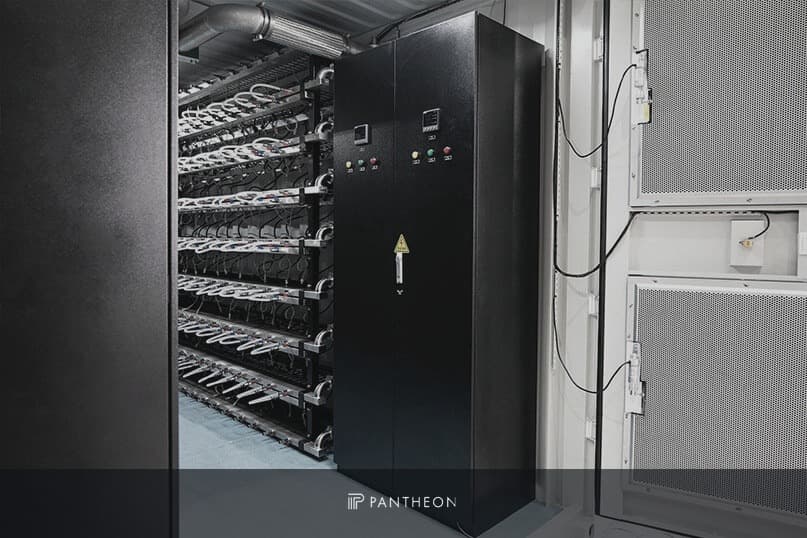
Reliable Power Distribution
Industrial-grade electrical infrastructure with dual-machine control and integrated lightning protection. Automatic safeguards isolate hardware during power anomalies before damage occurs.
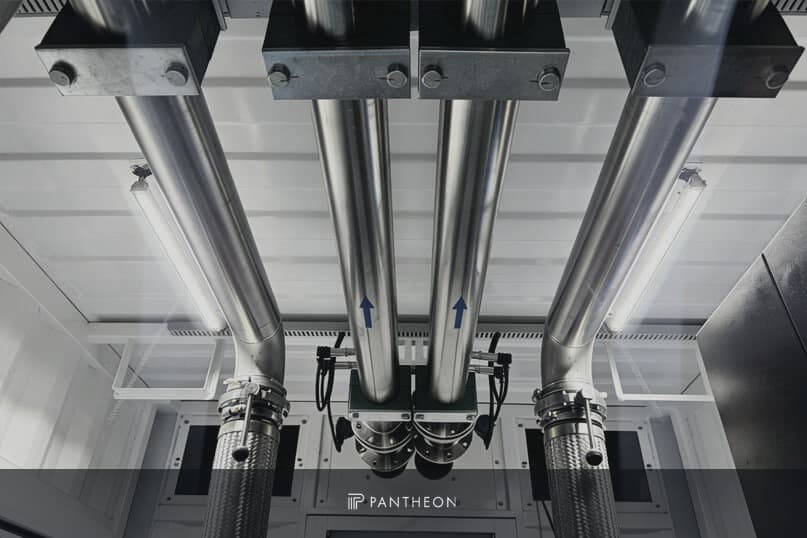
Redundant Dual-Loop Cooling
Dual circulation loops, dual CDUs, and multi-channel power distribution. If one side fails, the other keeps running. Fault tolerance that protects your hashrate.
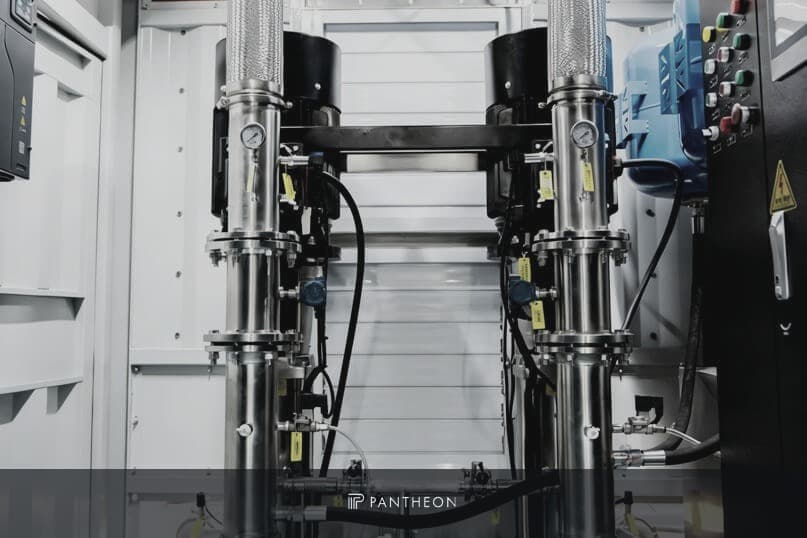
Advanced Pressure Management
Automatic pressure regulation maintains consistent coolant flow across every rack. A built-in make-up pump compensates for fluid loss in real time under full load.
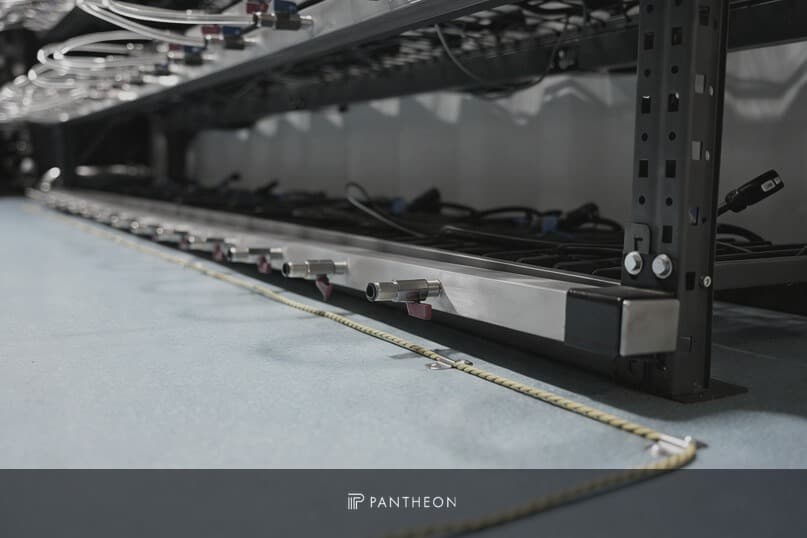
Proactive Leak Detection
Moisture-sensing immersion rope runs every rack bay. The moment moisture is detected, alarms trigger instantly, giving operations time to intervene before hardware is at risk.
Precision in Every Component
Institutional-grade infrastructure demands institutional-grade components. Every connection point, manifold, and panel is built for long-term reliability.
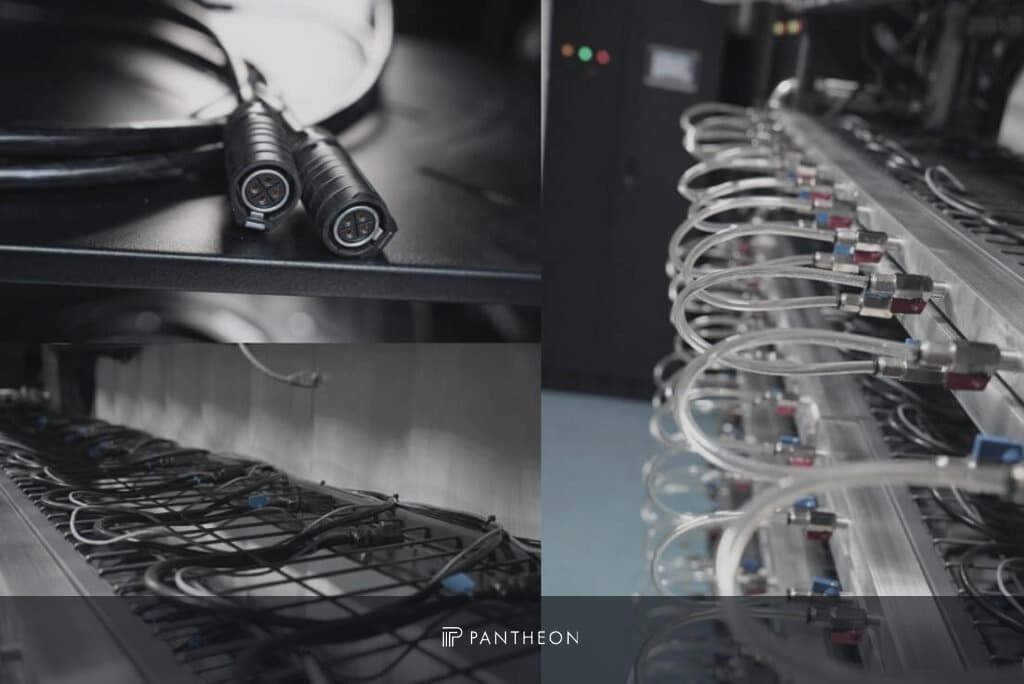
Aviation-grade plugs from the same supplier as Bitmain OEM equipment.
Reinforced grid panels for stable, collapse-free operation under full load.
304 stainless steel manifolds with matching ball valves and factory piping.
Mining vs. Buying Bitcoin
Side-by-side view of how direct mining exposure compares to spot or ETF allocation.
Below market price per BTC over miner's lifetime
Full market price at time of purchase
Daily BTC deposits as long as miners operate
No yield. Appreciation only
You own the ASIC hardware
No physical asset. Digital or paper exposure only
Custom payout thresholds determined by client
Must be manually executed on each buy
BTC paid to your own wallet. Hardware in your name
Relies on exchange/custodian/ETF issuer solvency
Coins with zero transaction history, highly valued by institutions for AML compliance
Coins purchased on exchanges may carry prior transaction history
Infrastructure retains value. Repurpose for AI, sell to hyperscalers
No residual asset. Sell or hold
Below market price per BTC over miner's lifetime
Full market price at time of purchase
Daily BTC deposits as long as miners operate
No yield. Appreciation only
You own the ASIC hardware
No physical asset. Digital or paper exposure only
Custom payout thresholds determined by client
Must be manually executed on each buy
BTC paid to your own wallet. Hardware in your name
Relies on exchange/custodian/ETF issuer solvency
Coins with zero transaction history, highly valued by institutions for AML compliance
Coins purchased on exchanges may carry prior transaction history
Infrastructure retains value. Repurpose for AI, sell to hyperscalers
No residual asset. Sell or hold
Freshly mined Bitcoin has zero prior transaction history. That makes it highly desirable for institutions, family offices, and OTC desks that need full AML compliance and clean provenance.
Unlike BTC purchased on exchanges, freshly mined coins carry no risk of association with prior illicit activity — a premium characteristic in institutional portfolios.
Mining and buying are complementary strategies. Mining adds yield and infrastructure exposure. Spot/ETF adds liquidity and simplicity. Many institutional allocators do both.
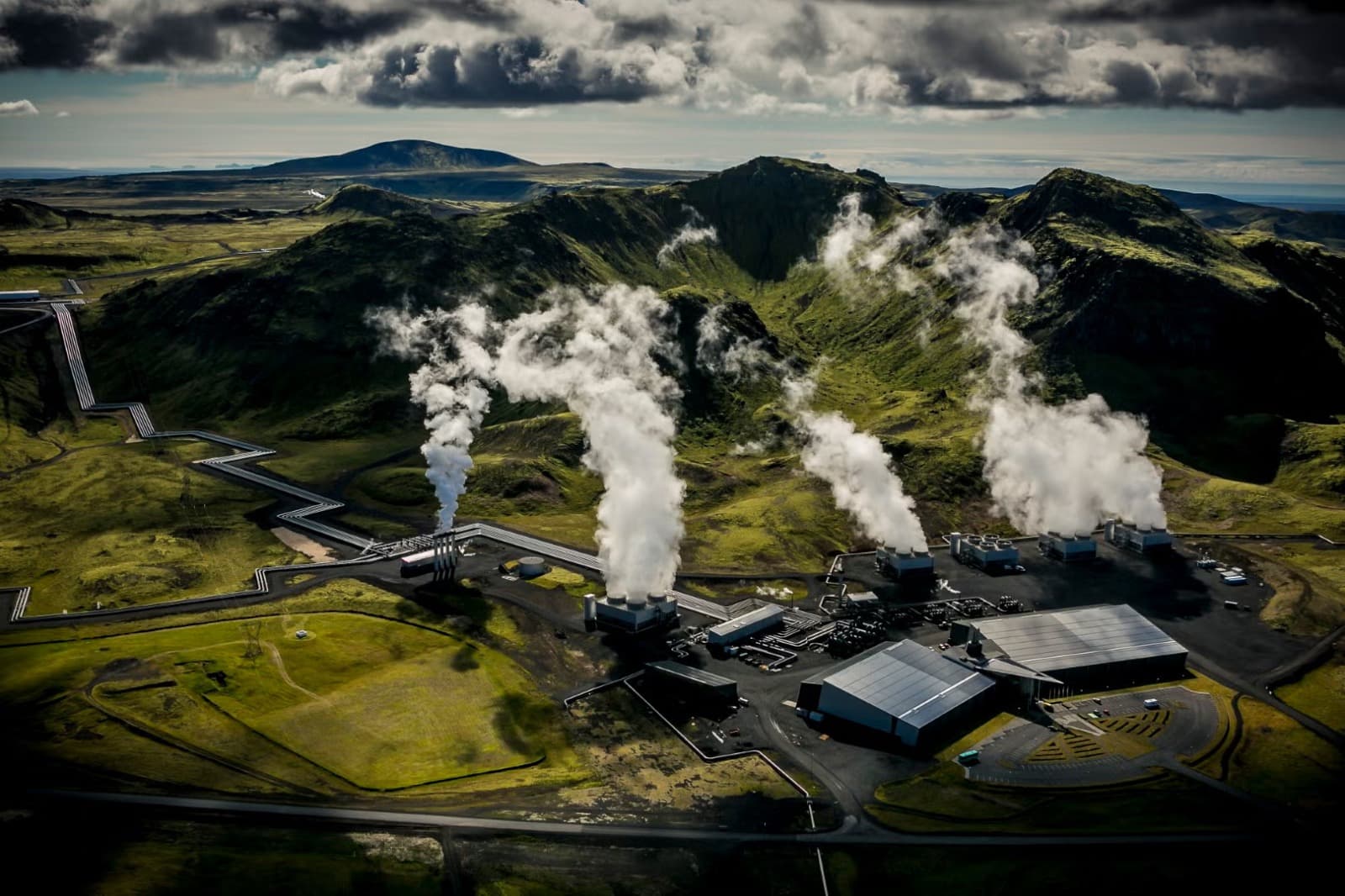
Active projects
Strategic locations selected for political stability, renewable energy, and reliable infrastructure.



See your BTC accumulation advantage
Mining acquires Bitcoin below market price over time. Use our calculator to compare your cost basis from mining versus buying on the open market, and see how infrastructure ownership compounds your BTC accumulation.
- Real-time network difficulty and hashrate data
- Cost basis advantage vs spot purchase
- Multiple scenario modeling (conservative to optimistic)
- Custom energy cost and hardware inputs
Industry-leading operational clarity
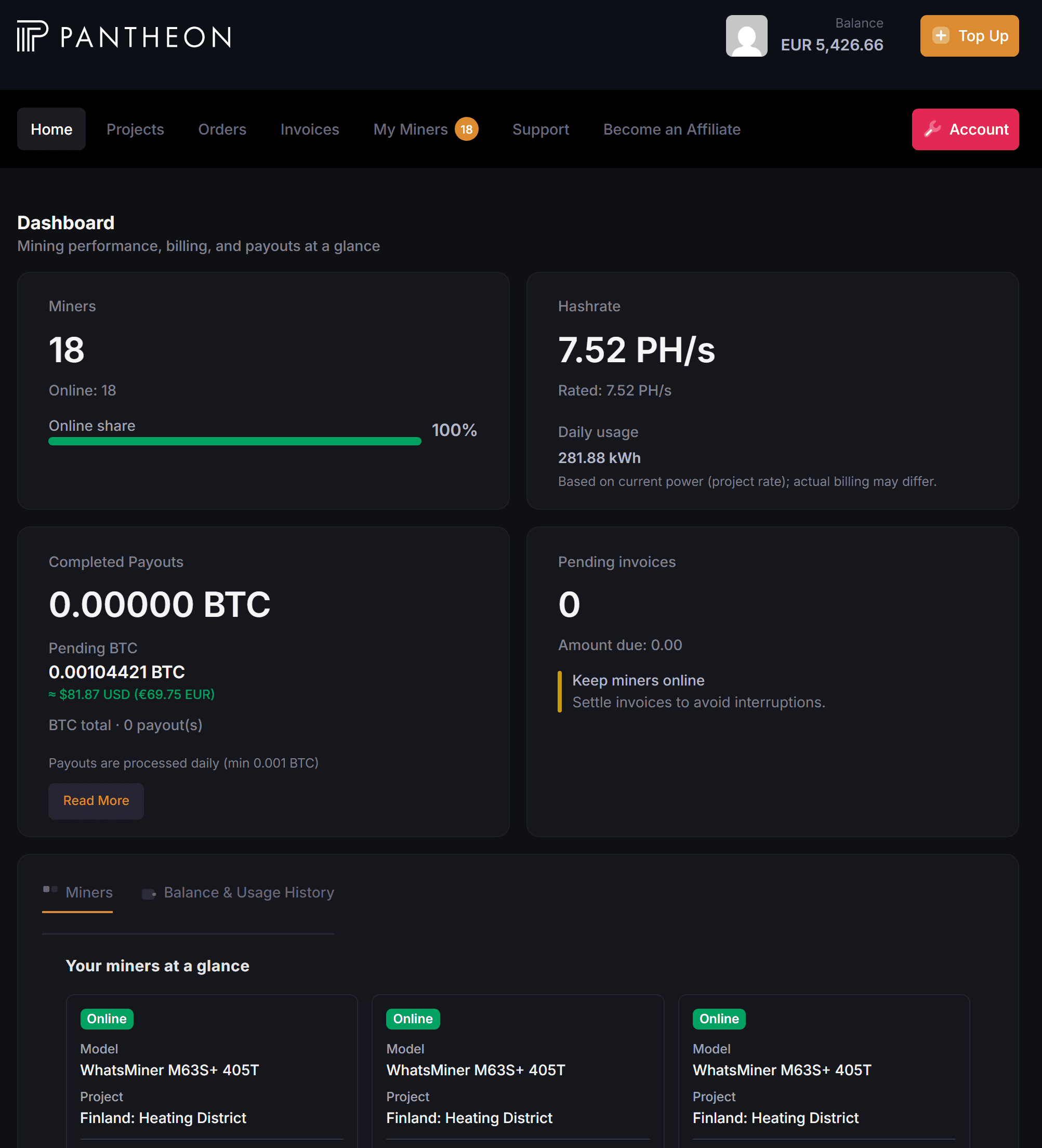
Total transparency into every aspect of your mining operation. Our proprietary dashboard delivers live insights down to each individual ASIC, so you always know exactly how your hardware is performing.
AI agents continuously monitor every miner, detecting anomalies and triggering preventive shutdowns before issues escalate. This is proactive risk management that protects your uptime and your hardware.
- Per-ASIC live performance tracking
- AI-powered predictive monitoring and anomaly detection
- Automated preventive shutdown before failures occur
- Daily BTC payout tracking to your wallet
- Energy consumption and efficiency metrics
- Monthly performance and maintenance reports
Built by operators, for clients
Pantheon Mining builds and operates Bitcoin mining infrastructure for clients seeking direct exposure without operational complexity. Our focus is on secure locations, efficient energy use, and long-term performance.
Based in Amsterdam, with operations across Norway, UAE, and Iceland, our team brings over 25 years of combined experience in Bitcoin mining, energy infrastructure, and institutional finance.
Learn more about us →
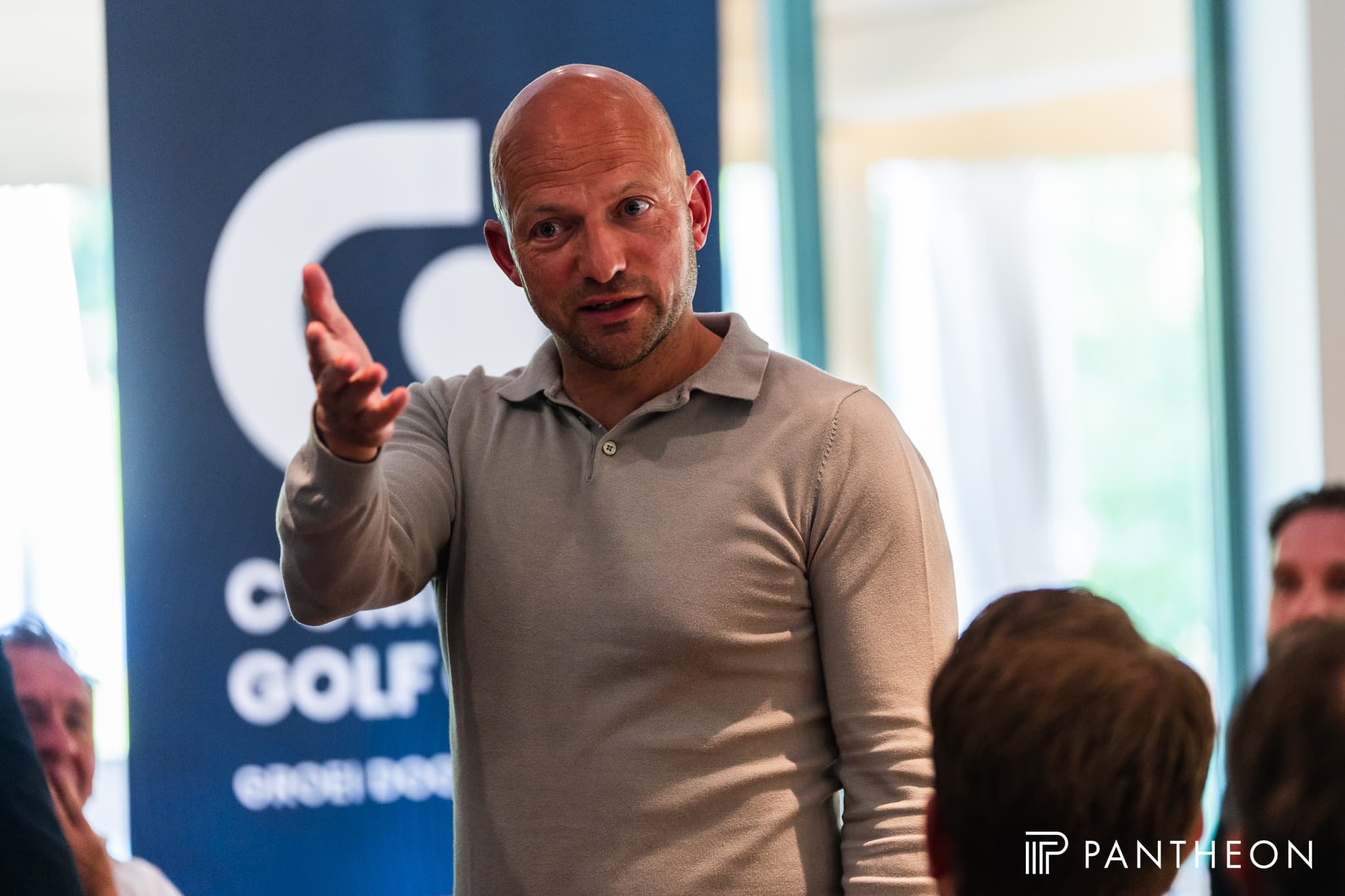

Built for institutional standards
Direct hardware ownership
Your name on the invoice. Your miners. Not a pool share, not a cloud contract, not a token.
Low-cost energy sourcing
We source the cheapest, most reliable energy at every site. Hydro, geothermal, grid, and solar depending on location.
No management fees
Cost-plus transparency. Every line item visible: energy, hosting, maintenance. No hidden margin.
AI-powered monitoring
Per-ASIC live tracking, predictive anomaly detection, and automated preventive shutdowns. 24/7.
Infrastructure that outlives the miner
When mining hardware reaches end-of-life, the infrastructure doesn't disappear. Energy contracts, containers, cooling systems, and licensed facilities all carry forward. These are real assets with real resale value.
The same sites that mine Bitcoin today can be repurposed as AI data centers, sold to hyperscalers, or re-equipped with next-generation miners. The infrastructure is already in place, permitted, and connected. That's a massive head start that new entrants can't replicate.
Our sites are prime candidates for AI compute and GPU hosting. The power, cooling, and connectivity are already there. Clients retain the option to pivot or sell to hyperscalers seeking turnkey deployment capacity.
Energy Contracts
Long-term energy agreements at competitive rates. Transferable to the next operator or use case.
Containers & Infrastructure
Purpose-built enclosures, cooling systems, and power distribution. Ready for immediate redeployment.
Licensed Facilities
Fully permitted, insured, and operational sites in stable jurisdictions. No bureaucratic restart.
Time to Deploy
Months of site selection, permitting, and construction already completed. A new entrant starts from zero.
From first call to first Bitcoin
Five stages from discovery to production — select a step to see what happens at each milestone.
Initial consultation
Investment thesis, risk tolerance, and alignment.
Learn about Bitcoin mining
Common questions
Bitcoin mining is the process by which new bitcoins are created and transactions are verified and added to the blockchain ledger. Miners use powerful computers to solve complex mathematical puzzles, and in return, they are rewarded with bitcoins. This process secures the Bitcoin network and ensures its decentralised operation.
Pantheon's Mining as a Service (MaaS) lets you purchase miners in our fully managed data centres without the hassle of managing hardware, energy contracts, or maintenance. We provide state-of-the-art mining equipment, secure hosting, and expert management to optimise your mining operation.
ROI in Bitcoin mining varies based on factors like network difficulty and hashrate. On average, our clients have seen positive returns within 12-18 months. Our experts can help you estimate potential ROI based on your investment.
Network difficulty measures how hard it is to mine new blocks. A higher difficulty can make mining more challenging. Hashrate represents the total computing power in the network. A higher hashrate can increase your chances of mining bitcoins. We constantly optimize your setup to adapt to these factors.
Our mining equipment retains significant resale value, even after its primary mining life. You can either resell the hardware or mine other SHA-256 coins (ex: Bitcoin Cash).
Yes, we negotiate cost-effective energy contracts to maximize your profitability. We have access to sustainable, low-cost energy sources, allowing us to offer competitive rates.
We strategically choose locations with access to renewable or inexpensive energy sources. Hydropower is one of the best choices regarding sustainable energy. This ensures a sustainable always-on operation while reducing environmental impact.
Pantheon Mining provides hassle-free, expert-managed mining services with competitive ROI. We handle all technical aspects, so you can focus on results. With years of track record, we are a household name in the mining industry.
Contact our team and we guide you by asking the right questions. From there we customize a fitting investment strategy and support you along the way.
Yes, Bitcoin mining is legal in most countries, and the network is highly secure. Pantheon Mining operates in compliance with applicable laws and regulations to ensure a safe and legitimate experience.
Absolutely. We provide access to real-time monitoring tools, allowing you to track mining equipment performance and earnings.
Ready to own the
infrastructure?
We work with family offices, institutional partners, and qualified private clients. Let's discuss how Bitcoin mining infrastructure fits your portfolio.