
Introduction
Bitcoin operates under a fixed and transparent monetary policy. Supply issuance follows a predefined schedule enforced by code rather than discretion. Every new unit of Bitcoin enters circulation through mining.
Investors commonly access Bitcoin through secondary markets. A smaller group participates directly in the issuance process. This distinction defines two different economic roles within the same system.
Understanding issuance participation clarifies how capital engages with Bitcoin beyond price exposure.
Bitcoin’s Programmatic Monetary Policy
Bitcoin’s supply is capped at 21 million units. New issuance follows a deterministic block reward schedule that declines over time through halving events. The protocol defines both the rate and the total supply.
Block production targets a ten-minute interval. Difficulty adjusts automatically to maintain issuance consistency regardless of network growth. Monetary expansion remains governed by rules embedded in the protocol.
This structure creates a predictable supply curve that is independent of policy committees, discretionary intervention, or external governance.
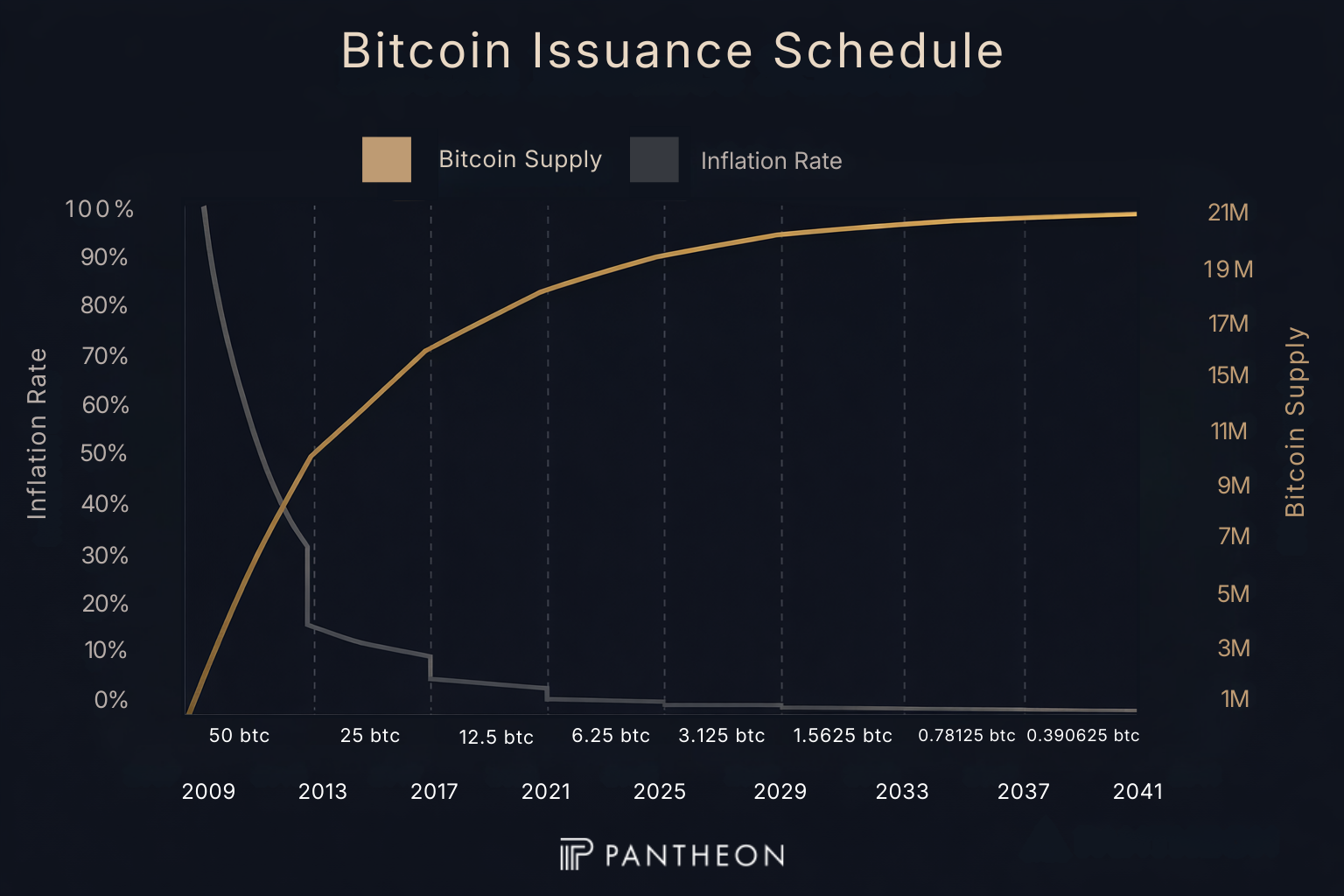 Figure 1: Bitcoin’s Programmatic Supply Trajectory
The chart visualises the pre-defined supply path and declining issuance rate embedded in the protocol. Each halving reduces new supply growth while total issuance converges toward the 21 million cap. This structure demonstrates that monetary expansion follows a fixed computational schedule, reinforcing Bitcoin’s rule-based supply integrity.
Primary Issuance and Secondary Acquisition
Bitcoin enters circulation through block rewards earned by miners. This is the primary issuance mechanism.
Secondary acquisition occurs when existing holders transfer Bitcoin through market transactions. These transfers redistribute existing supply without affecting issuance.
Participation in primary issuance places capital inside the mechanism that distributes new supply. Participation in secondary markets provides exposure to price movements of existing supply.
Both forms of access relate to the same asset. They operate at different structural layers of the system.
Difficulty Adjustment and Supply Integrity
Difficulty adjustment maintains block production near its target interval. When computational power increases or decreases, the protocol recalibrates automatically.
Issuance timing remains consistent. Supply expansion follows the schedule—network security scales with participation.
Mining, therefore, operates within a self-correcting issuance framework. Production is not discretionary. It is constrained by protocol rules that preserve supply integrity.
Mining as Monetary Participation
Mining performs two economic functions simultaneously. It distributes newly issued Bitcoin and secures transaction settlement.
Miners validate blocks according to protocol rules. The network rejects invalid blocks. This enforcement mechanism protects issuance discipline and transaction finality.
Capital allocated to mining, therefore, engages directly with the network’s monetary distribution layer. Participation extends beyond ownership. It contributes to issuance and security under defined parameters.
Strategic Implications for Allocators
Ownership provides exposure to market valuation. Mining provides exposure to issuance mechanics and operational execution. This structural distinction is developed further in Owning Bitcoin vs Producing Bitcoin.
Issuance participation introduces measurable inputs: energy pricing, uptime performance, hardware lifecycle management, and cost control. This operating layer is examined in Why Mining Returns Fail at Scale and How Infrastructure Preserves Them.
Allocators evaluating long-duration Bitcoin exposure may distinguish between holding supply and participating in its distribution. Each position serves a specific portfolio function and should be assessed through its respective performance drivers.
Investment Implications
Bitcoin’s monetary policy is enforced through mining. Every newly issued unit enters circulation through block validation in accordance with protocol rules.
Ownership reflects exposure to market pricing. Mining reflects participation in issuance and supply enforcement.
Recognising this structural distinction enables more precise capital allocation within the Bitcoin ecosystem.

Grow your wealth with Pantheon Bitcoin mining. Providing sustainable Bitcoin returns for private and institutional investors.