
Introduction: Mining Enters the Institutional Phase
Bitcoin mining has moved from informal operations to structured infrastructure. Investors now expect clarity, traceability, and measurable performance. As capital flows grow, reporting becomes the leading indicator of operator quality. Mining is entering a stage where reliable data carries more weight than claims about equipment or power.
Why Transparent Reporting Defines Operator Quality
Investors rely on verifiable data to understand how an operation performs. Mining output depends on uptime, energy cost, and fleet management. Without structured reporting, it is impossible to model returns with confidence. Professional reporting provides the visibility necessary to evaluate performance and determine where capital should be allocated.
The Core Metrics Investors Rely On
Institutional investors assess mining performance through a clear set of operational metrics. These include:
- Uptime at the site, rack, and machine levels
- energy cost per kilowatt hour
- cooling and thermal conditions
- maintenance cycles and failure rates
- hardware age and efficiency distribution
- Revenue per kilowatt hour
- Cost per Bitcoin produced
- fleet efficiency curves
- power management and load behaviour
These metrics serve as the basis for assessing long-term performance and capital planning.
The Industry Gap: Why Most Miners Do Not Meet These Standards
Many operators fail to provide the necessary data for institutional review. Maintenance is inconsistent, logs are incomplete, and uptime data is missing. Energy procurement often lacks documentation. Hardware rotation is ad hoc and not planned across the fleet. These gaps reduce reliability and limit access to sophisticated capital.
Reporting as a Source of Yield Stability
Consistent reporting improves mining performance. Precise data exposes inefficiencies early, allowing operators to correct problems before they impact output. Disciplined reporting reduces downtime and supports predictable operational curves. When investors receive regular updates, they can model returns with greater accuracy and plan allocations with confidence.
Mining Adopts Infrastructure Reporting Standards
Mining now aligns with the reporting standards used in established infrastructure sectors. Renewable energy facilities, data centres, and telecommunications assets rely on continuous operational data to protect capital and maintain performance. Bitcoin mining follows the same logic as it matures. Reporting becomes the framework that connects technical activity with financial outcomes.
How Institutional Reporting Unlocks Capital Access
Institutional investors select operators who provide reliable data. Reporting reduces uncertainty and supports risk assessment. Family offices, funds, and large-scale allocators require transparency before committing capital. Reporting acts as a filter, determining which operators can engage in long-term investment.
Pantheon’s Position: Infrastructure-Level Transparency
Pantheon provides site-level uptime reporting, documented hardware rotation, visibility into energy procurement, and maintenance logs. Operational dashboards present precise performance data, and reporting adheres to the standards expected by institutional investors. This structure gives investors confidence in how each facility operates and in the generation of output through controlled processes.
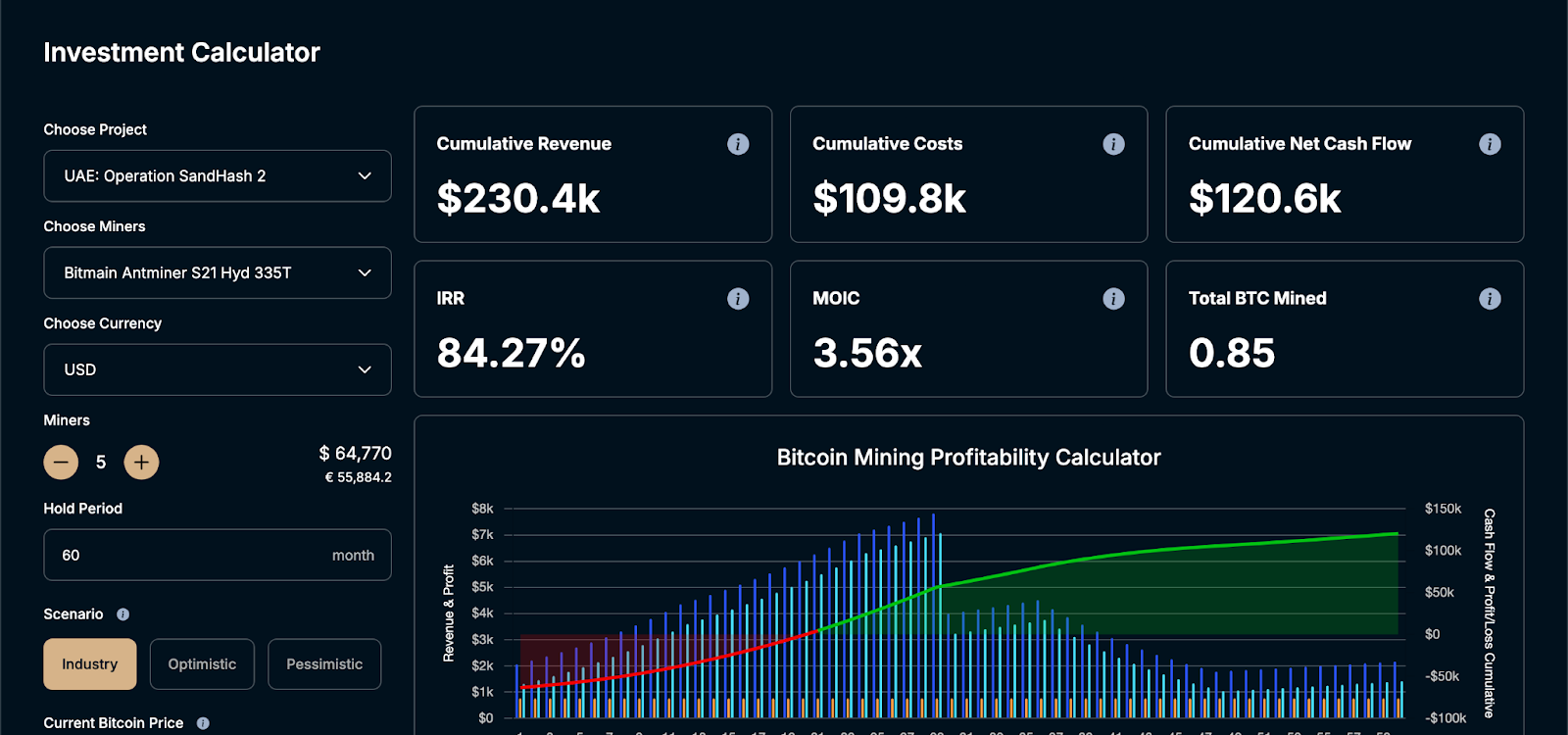 Figure 1. Pantheon’s calculator showing long-term mining performance, IRR, MOIC and cumulative cash flow.
The dashboard presents the core performance indicators that institutional investors expect. Revenue, costs, IRR, MOIC, and cumulative cash flow are tracked across the whole holding period with clear visibility. Each metric reflects how the site performs over time and how operational decisions influence financial outcomes. This level of reporting allows investors to verify results, understand risk, and plan allocations with confidence.
Reporting Becomes the Real Competitive Frontier
Mining has matured into an institutional market where operational visibility defines operator strength. Investors allocate to operations they can verify. Reporting becomes the foundation that supports long-term mining performance. Operators who deliver precise data gain the trust required to access capital and maintain consistent output across market cycles.
For additional mining and investment insights, continue in our Insights section.