
Bitcoin mining is often assessed through hashrate, machine efficiency, and network difficulty. These metrics matter, but they do not determine long-term performance. Energy structure does.
For serious investors, the quality of power contracts shapes cost stability, uptime, and margin visibility over time.
Mining outcomes depend less on how fast machines run and more on how reliably energy is secured.
Hashrate is variable, energy is structural
Hashrate changes constantly. New hardware enters the network, older units rotate out, and difficulty adjusts. These shifts influence short-term output but do not explain why some operations remain resilient across market cycles while others struggle.
Energy contracts operate on a different horizon. Power pricing, delivery terms, and grid conditions define the base cost of every mined Bitcoin. Once agreed, these contracts set the economic framework of an operation.
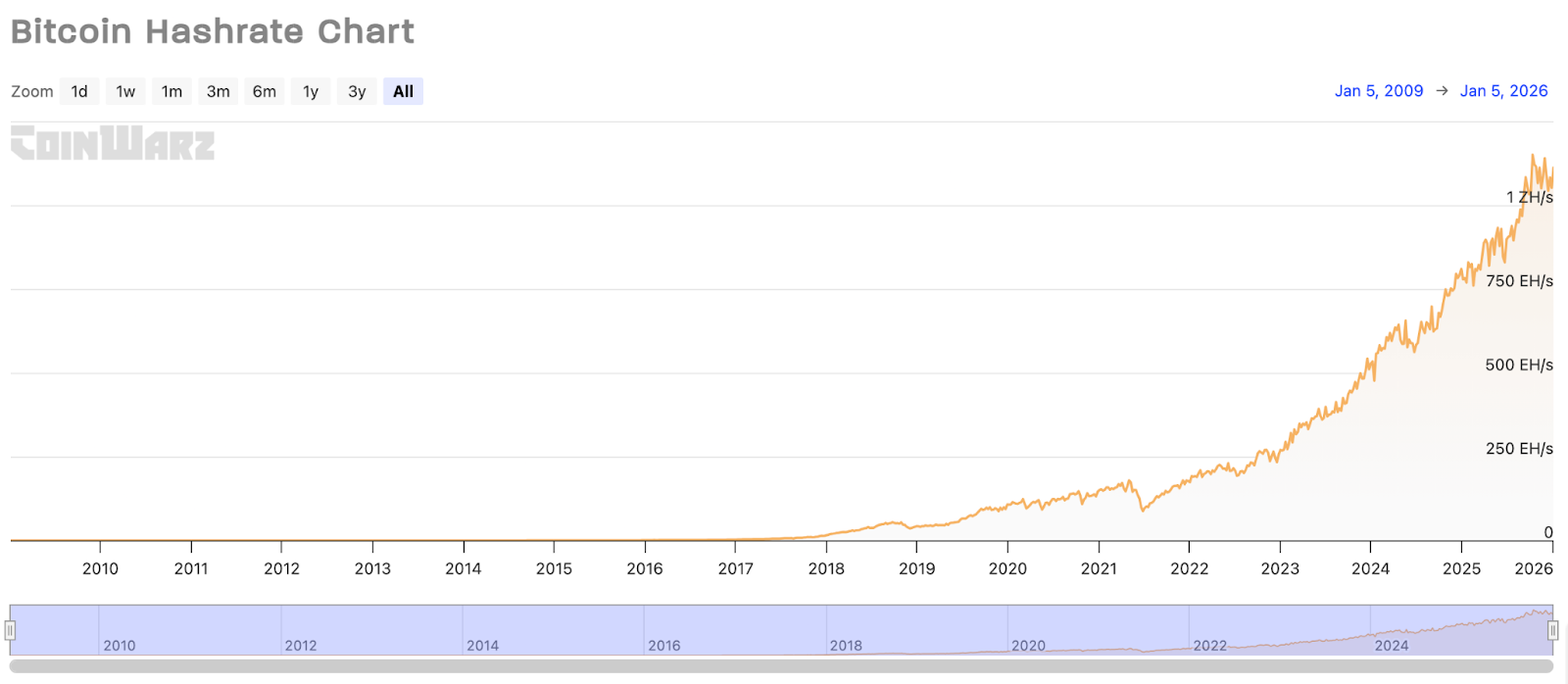 Figure 1: Bitcoin network hashrate growth over time (Source: CoinWarz)
The figure shows the steady expansion of Bitcoin’s total network hashrate over time. Growth reflects continuous hardware deployment and competitive entry rather than site-level operational quality. While hashrate signals aggregate capacity, it remains an external variable that individual operators cannot control. This reinforces the distinction between variable network conditions and the structural role of energy contracts in determining long-term mining performance.
Fixed versus indexed power pricing
Power pricing structure plays a central role in margin control.
Fixed-price contracts provide cost clarity. Operators can model expenses accurately, plan capital deployment, and manage cash flow with confidence. This structure supports stable operations during periods of market volatility.
Indexed pricing links energy costs to spot markets. While it may lower expenses during favourable conditions, it introduces exposure during price spikes or grid stress. Without disciplined energy management, margins can narrow quickly.
Institutional-grade mining prioritises predictable cost structures over short-term optimisation.
Curtailment rights and grid participation
Curtailment clauses define how a site interacts with the grid during periods of high demand. Poorly structured terms can lead to forced shutdowns and lost production.
Well-designed agreements align mining operations with grid requirements. Sites that participate in demand response programmes can adjust load while maintaining operational continuity. This approach supports uptime and preserves consistent output.
Grid participation positions mining as a controllable energy asset rather than a vulnerable consumer.
Contract duration and margin visibility
Short-term power agreements introduce uncertainty. Each renewal carries pricing risk and potential disruption. Long-term contracts provide clarity over future costs and support disciplined planning.
Contract duration affects more than pricing. It shapes hardware deployment, maintenance schedules, and capital recovery timelines. Operations with long-term energy security can optimise performance across the full lifecycle.
Margin visibility depends on contractual stability.
Mining as an energy-first infrastructure asset
When evaluated through energy structure, mining aligns with other infrastructure assets. Power plants, data centres, and district energy systems all rely on long-term energy agreements, operational discipline, and predictable output.
Mining sites built on this foundation operate as productive infrastructure. Performance comes from execution rather than timing.
This perspective explains why professional operators focus on energy contracts before expanding hashrate.
For a deeper look at how energy efficiency translates into value creation, see The Energy Arbitrage: How Bitcoin Turns Power Into Yield.
A practical example of energy-first mining
The role of energy contracts becomes clear when applied in practice.
Norgreen, Pantheon’s mining project in Norway, operates inside a district energy facility with structured power agreements, stable load behaviour, and long-term energy planning. The site prioritises predictable pricing, defined curtailment terms, and integration with local energy infrastructure.
This setup reflects the principles outlined in this article. Mining performance is shaped by energy structure rather than hashrate expansion. Stable contracts support disciplined operations, lifecycle planning, and consistent output across market conditions.
Further details on the site design and energy structure are available in the Norgreen project overview.
Energy discipline defines serious mining operations
Hashrate draws attention. Energy structure drives results.
Mining operations that secure stable pricing, clear curtailment terms, and long-duration contracts gain control over costs and output. This control supports consistent performance across market cycles and aligns mining with institutional investment standards.
Energy discipline is not a technical detail. It is the foundation of long-term mining performance.
Related reading:
- Bitcoin Managed Mining Infrastructure for Long-Term Yield
- Why Operational Reporting Now Defines Bitcoin Mining Performance