
Introduction
Bitcoin mining is often grouped with venture-style risk because it sits inside a fast-moving technological ecosystem. This framing is inaccurate. At scale, mining behaves less like speculative capital and more like private infrastructure.
Venture capital depends on optionality, exits, and asymmetric outcomes. Bitcoin mining depends on execution, duration, and repeatable output. Once structured correctly, mining produces measurable results that align with how infrastructure assets are evaluated and financed.
This distinction matters for allocators who already understand venture risk and are now reassessing how Bitcoin exposure fits into long-term portfolios.
Risk Profiles Are Fundamentally Different
Venture capital concentrates risk in uncertainty. Outcomes depend on product adoption, execution velocity, regulatory timing, and exit conditions. Returns emerge from a small number of asymmetric successes, while most positions remain illiquid or underperform.
Bitcoin mining operates within a different risk framework. Output is governed by energy cost, system uptime, and operational efficiency. Performance does not depend on exits, acquisitions, or market narratives. It is driven by execution within known parameters.
When energy structure, hardware deployment, and operations are properly aligned, performance remains measurable, repeatable, and bounded. This predictability is what allows mining to function as infrastructure exposure.
Duration and Cash Flow Visibility
Venture capital is duration-uncertain by design. Capital is locked for long periods with no interim cash flow. Liquidity depends on exits that cannot be scheduled or controlled.
Mining infrastructure produces continuous output once systems are energised. Cash flow remains measurable throughout the operating life of the site. Duration is defined by energy contracts, hardware lifecycles, and maintenance planning rather than exit timing.
Because output is continuous and inputs are contract-defined, mining performance can be modelled in advance. Revenue, operating costs, and recovery timelines can be projected under defined assumptions instead of inferred after the fact.
This allows capital to evaluate duration and cash flow using infrastructure-style models rather than relying on optional exits or valuation events.
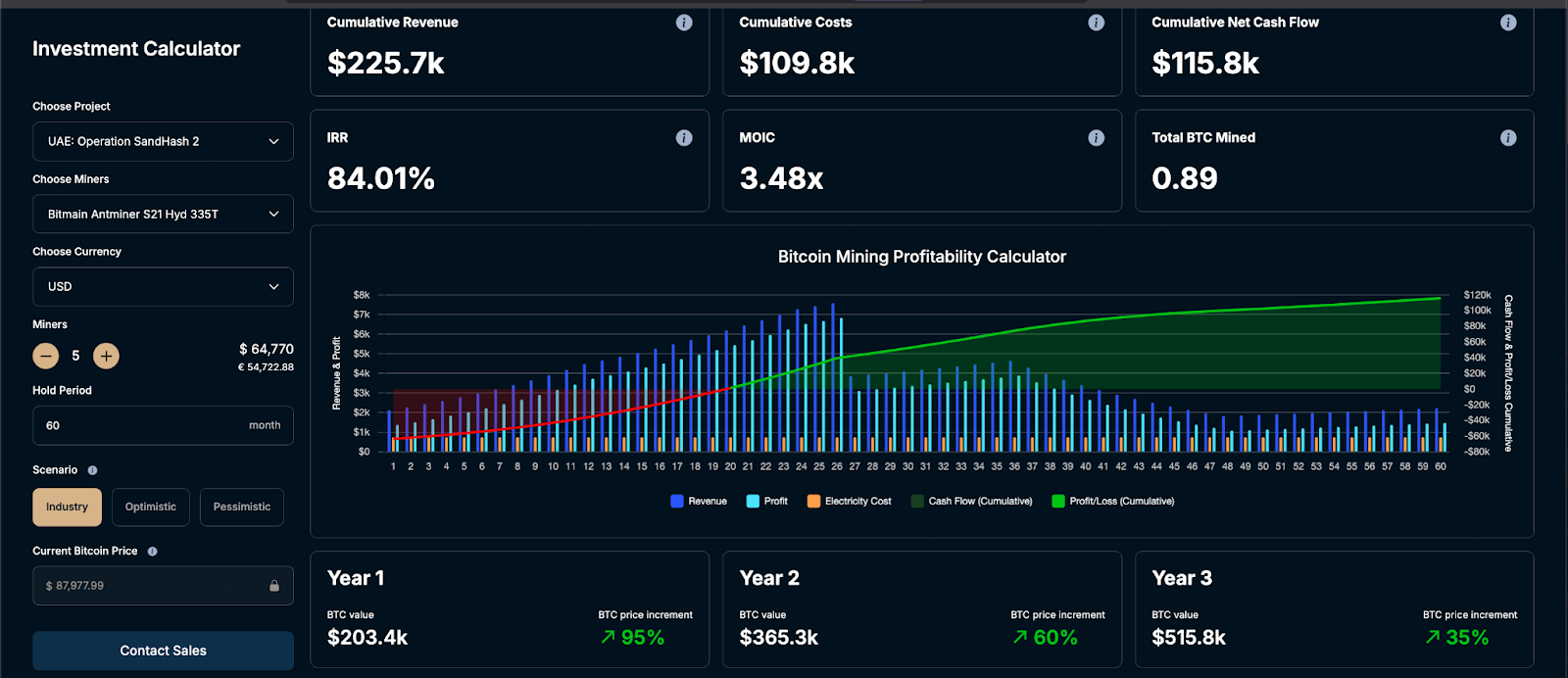 Figure1: Example of projected mining cash flow under fixed energy and operating assumptions.
To explore how duration, costs, and output interact under different operating conditions, see the Bitcoin mining calculator.
Portfolio Construction Implications
Venture capital occupies the high-volatility, high-uncertainty segment of a portfolio. It requires diversification across many positions to manage failure rates. Position sizing is driven by the potential upside rather than the predictable contribution.
Bitcoin mining fits a different role. It provides exposure to Bitcoin’s issuance while producing repeatable output through infrastructure. When structured correctly, mining can sit alongside other real assets that prioritise durability, continuity, and controlled risk.
For allocators managing large portfolios, mining introduces productive Bitcoin exposure without relying on speculative outcomes.
Where Venture Logic Fails in Mining
Applying venture logic to mining leads to structural errors. Optimising for short-term upside encourages flexible power arrangements, rapid hardware turnover, and reactive scaling. These approaches create fragility at scale.
Mining systems do not benefit from optionality in the same way as startups. Frequent changes increase operational risk, disrupt planning, and erode margins over time. Stability, not experimentation, preserves performance.
Mining as Private Infrastructure Exposure
Private infrastructure assets share common characteristics. They rely on long-term contracts, predictable demand, integrated operations, and measurable performance. Bitcoin mining follows the same logic when built on proper foundations.
Norgreen applies this infrastructure model in practice. The site operates within a district energy system with integrated power, load, and heat flow. Energy contracts define costs upfront. Operations prioritise continuity, with performance measured by uptime, stability, and efficiency.
This framework places mining within private infrastructure. At scale, returns are generated through disciplined energy management and integrated operations over long-duration systems.
Conclusion
Bitcoin mining operates as infrastructure. It converts energy into financial output under defined operating conditions.
For Web3 funds and family offices reassessing venture exposure, mining offers productive Bitcoin exposure through duration, infrastructure, and execution.
Allocators who apply the right framework price risk correctly and position mining appropriately within their portfolios.