Why the Security Budget Matters for Investors
The security budget is one of the most discussed concepts in Bitcoin mining because it directly relates to how the network continues securing itself as adoption grows over time.
As Bitcoin matures, investors are paying closer attention to how mining economics evolve across halving cycles, how transaction fees contribute to miner revenue, and how infrastructure-grade operators are adapting to a changing market environment.
For investors evaluating managed Bitcoin mining, the security budget debate is less about whether the network remains secure and more about which operators are best positioned to remain resilient through future cycles.
What the Security Budget Actually Is
The security budget is the total value paid to miners to secure the Bitcoin network, consisting of block rewards and transaction fees.
Block rewards are newly issued Bitcoin distributed to miners who successfully add blocks to the chain. Following the April 2024 halving, the block reward stands at 3.125 BTC per block and will continue declining gradually over time according to Bitcoin’s fixed monetary schedule.
Transaction fees are paid by users who want their transactions prioritised on the network. As Bitcoin adoption grows and on-chain activity expands, transaction fees are becoming an increasingly important component of overall miner revenue. We explored this transition further in our analysis of what happens when all Bitcoins are mined.
Together, block rewards and transaction fees create the economic incentive that supports Bitcoin’s global mining infrastructure.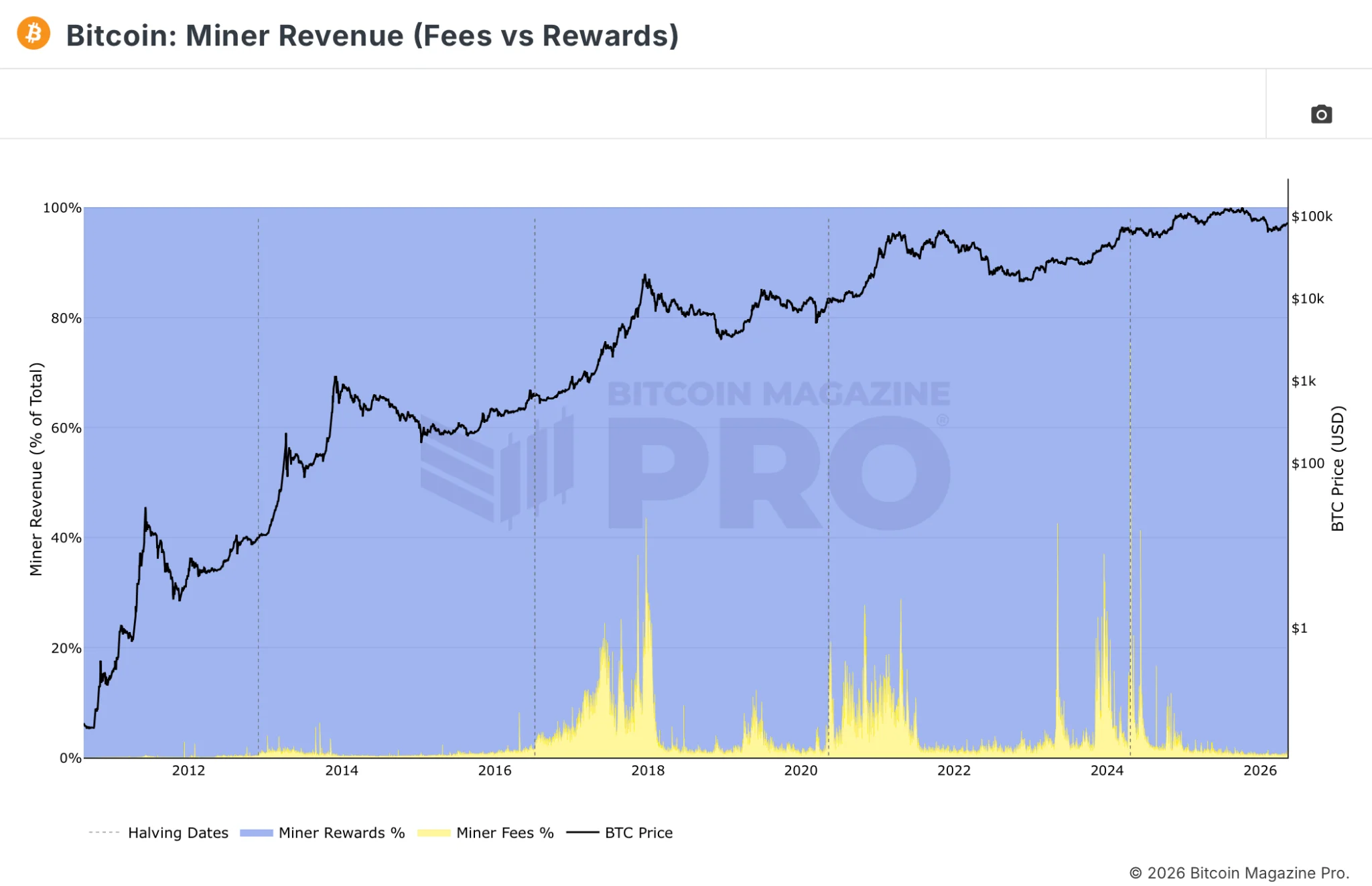
Figure1: Bitcoin miner revenue diversification over time (Source: Bitcoin Magazine Pro)
Mining Economics Have Evolved Significantly
Bitcoin mining economics today look very different from earlier market cycles.
Mining operations increasingly generate revenue from multiple sources alongside block rewards, including demand response agreements, heat recycling, renewable energy incentives, and AI compute hosting.
In energy markets such as Texas, miners are compensated for reducing electricity consumption during periods of peak demand. In Northern Europe, mining heat is already being repurposed for district heating and industrial applications.
These developments are expanding the economic role of mining infrastructure beyond transaction processing alone.
At the same time, institutional mining operators increasingly rely on long-term energy agreements or direct exposure to owned generation assets, helping stabilise operating costs across market cycles.
Operations built around hydro, solar, and other renewable energy sources are structurally positioned to benefit from low-cost and abundant energy over the long term. Pantheon’s Norgreen project in Norway reflects this approach through long-term exposure to hydropower infrastructure and district heating integration.
Hardware efficiency has also improved substantially. Modern ASIC fleets produce significantly more hashrate per unit of energy than earlier generations, improving operational efficiency while strengthening overall network security.
The result is a mining industry that is becoming more infrastructure-driven, operationally disciplined, and resilient over time.
The Halving Cycle Continues to Strengthen the Network
Bitcoin’s halving cycle has consistently coincided with long-term growth in network participation and mining infrastructure.
Between the May 2020 halving and the April 2024 halving, Bitcoin's hashrate increased approximately 5.53x while Bitcoin’s price rose roughly 7.28x over the same period.
Although block rewards decline every four years, the overall network has continued attracting capital, infrastructure investment, and computing power at a global scale.
This growth reflects Bitcoin’s expanding role as a financial and settlement network while reinforcing the importance of efficient mining infrastructure.
For investors, the key differentiator increasingly comes down to operator structure, energy strategy, and infrastructure quality rather than short-term market conditions alone.
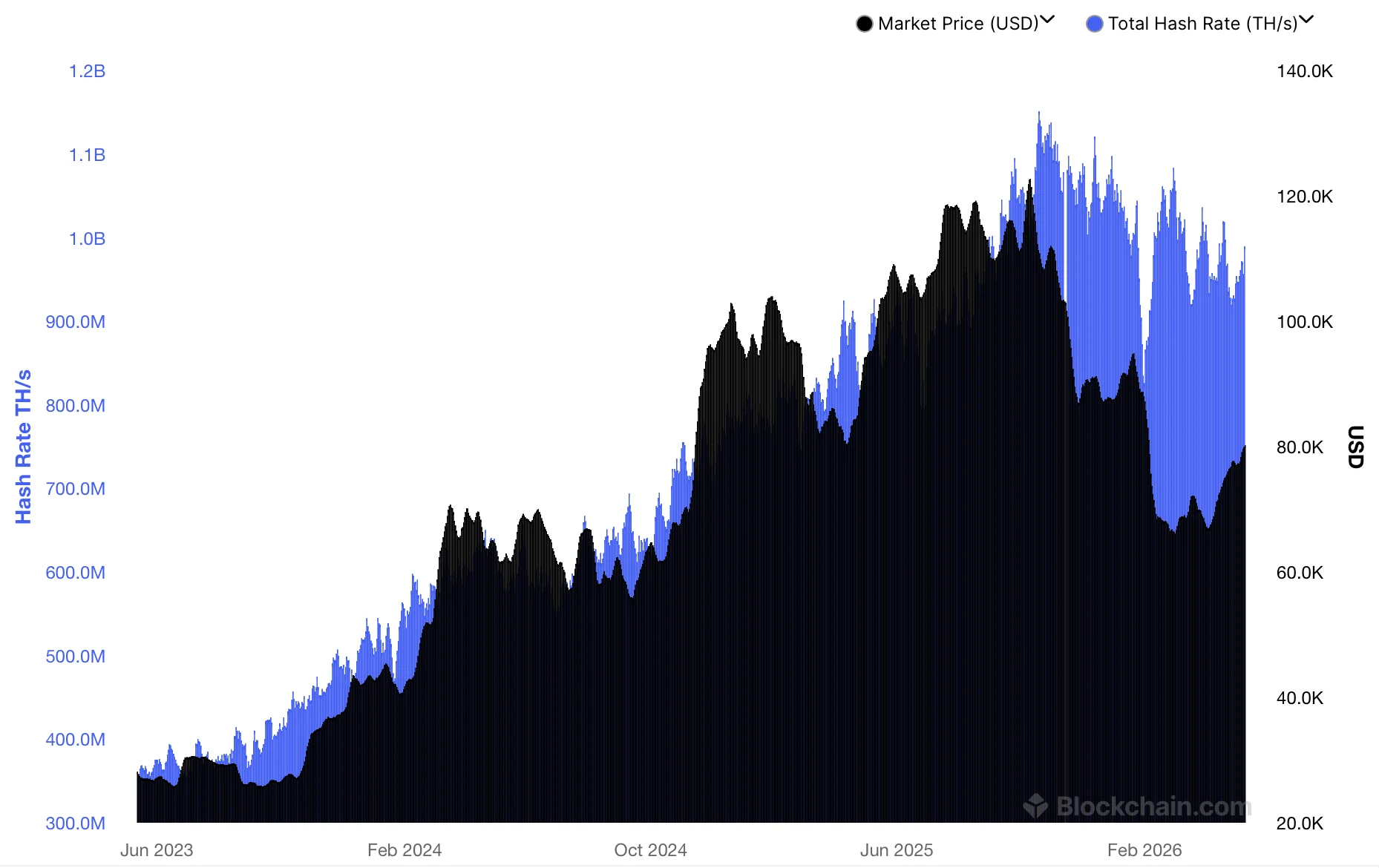
Figure 2: Bitcoin price and hashrate across halving cycles (Blockchain.com Hashrate Chart)
Bitcoin’s hashrate has continued rising alongside long-term price appreciation, reflecting sustained investment in mining infrastructure and network security across market cycles.
Transaction Fees Are Becoming More Relevant
Transaction fees already contribute meaningful revenue during periods of elevated network activity.
The introduction of Ordinals in 2023, increased institutional settlement activity, Lightning Network growth, and expanding Bitcoin-based financial infrastructure have all contributed to higher transaction demand on the base layer.
As Bitcoin adoption expands globally, transaction activity continues evolving alongside it.
Fee revenue remains dynamic across market cycles, although its role within the broader mining economy has become increasingly visible in recent years.
This gradual transition supports a more diversified long-term revenue structure for mining operations while reinforcing Bitcoin’s role as a global settlement network.
Bitcoin participation extends beyond pure economics
There are currently tens of thousands of publicly reachable Bitcoin nodes operating around the world, reflecting the decentralised nature of the network.
A growing number of home miners, solo miners, and open-source hardware communities also continue participating alongside large-scale industrial operators.
This broad participation supports Bitcoin’s decentralisation while reinforcing a resilient and globally distributed infrastructure layer.
What Investors Should Focus On
The security budget reflects the evolution of Bitcoin’s mining economy.
For investors evaluating managed Bitcoin mining, the key variables include:
- Long-term energy access
- Infrastructure quality
- Hardware efficiency
- Diversified revenue
- Operational discipline
Mining operations built around renewable energy and efficient infrastructure are positioned to remain resilient across future halving cycles.
As Bitcoin adoption grows, the security budget debate increasingly highlights the strength of mining infrastructure.